[Week 5 of 2026] Silver, Shorts, and Schemes
![[Week 5 of 2026] Silver, Shorts, and Schemes](/content/images/size/w960/2026/01/e5f5a322-3209-47a8-9a26-6d9892b6d50f.png)
Welcome back to Price and Prejudice with a few musings from Week 5 of 2026. Now that the Capital Markets & Investments class at Columbia has started, the blog will also reference to some contents from class as well.
A Silver Lining
This WSJ article, published on the evening of January 29, captured the market at its peak. With silver up a staggering 265% over the past year and gold flirting with $5,600, the narrative was one of retail triumph. The story effectively portrays precious metals not just as an investment, but as an insurance policy against a debased US dollar and a dysfunctional government.
By the next day, however, the crown was gone: the very retail investors the WSJ described as "benefiting" from the surge were the ones most exposed to the Friday downfall.
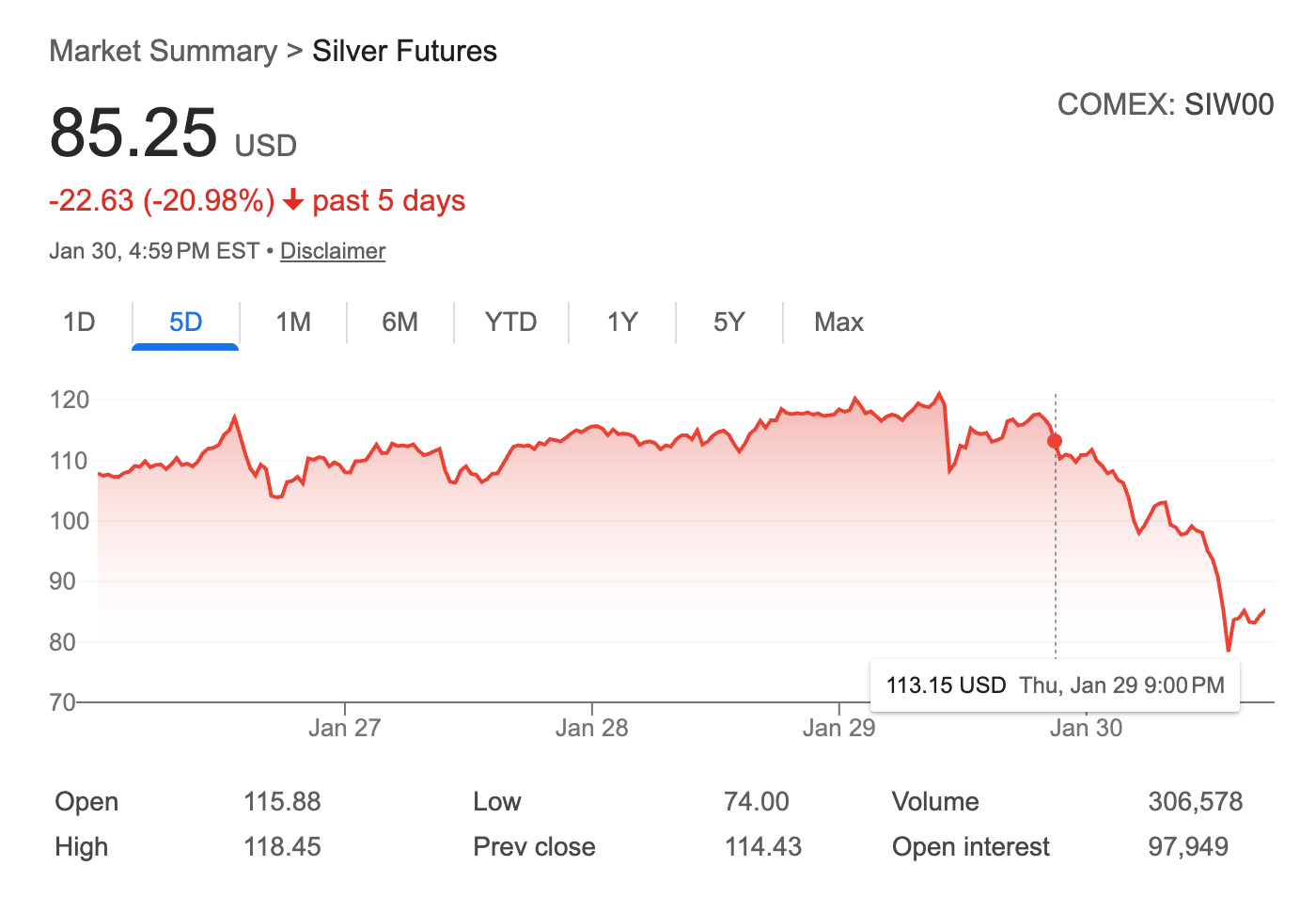
The recent comments attribute the selloff to the new Fed Chair nomination, but maybe the WSJ ringing the bell at the exact high mattered too. The more interesting question, of course, is whether this is a dip-buying opportunity or the end of the trade, and the honest answer is that nobody knows.
Short Selling, In Practice
We talked about short selling in class, but the practical question is always: what does it actually look like when someone does it well? This FT article is a pretty clean example and shows the playbook: publish a credible analysis that surfaces something investors vaguely knew but hadn’t priced, hope the market believes you, and let expectations do the rest. You don’t need to prove the company is fake, just that the story holding the valuation together is thinner than advertised.
The frothier the stock, the more its valuation is driven by expectations rather than cash flows. Which means if you can reverse expectations, you don’t need new information, just a new framing.
h/t to Victor Wu in class for flagging this article
Making Delegation Work
A lot of finance thrives on delegation, and delegation reliably creates incentive mismatch. Shareholders hire managers, voters hire politicians, and then everyone spends decades inventing compensation schemes. In corporate finance, usually we tie the CEO's compensation to the stock price, which may or may not be good, but at least it’s legible.
Which brings us to this interesting proposal: linking politicians' pay to GDP. The appeal is obvious: align incentives, focus minds, and make growth everyone’s problem. But it comes with the same problem as stock-based pay: GDP, like a share price, is a noisy proxy that can drift far from the underlying reality it’s supposed to measure. And once compensation is tied to a single number, effort predictably shifts toward managing that number rather than the thing it represents.
Podcasts
- This podcast profiles Depository Trust & Clearing Corporation (DTCC), which is a key infrastructure for the U.S. stock market.