[Week 46 of 2026] CEO Risk
Welcome back to Price and Prejudice with a few musings from Week 46 of 2026. Today we talk about CEOs – what they actually do and how much they matter.
Jensen Huang resigned as CEO of Nvidia on Thursday, after reports about his personal relationships raised national-security questions. The company’s CFO is now running it on an interim basis.
It is hard to think of a large company more closely identified with one person. Huang co-founded Nvidia more than thirty years ago, ran it the entire time, and by most accounts kept an unusually large share of decisions to himself. The stock fell on Thursday, though it recovered part of its early decline. Leaving the personal details aside, the episode raises natural questions about what it is that CEOs actually do and how much they matter, both for the company’s fundamentals and for its valuation.
Let's start with what CEOs do. The honest answer is that they spend most of their time talking to people (I can confirm that this is also what deans of schools do, who are basically akin to CEOs). A large study collected weekly diaries from more than a thousand CEOs, through daily calls with them or their assistants. Most of the time went to interacting with others, in meetings, calls, and visits, and far less went to working alone.
The more interesting finding is that CEOs come in two broad types. Some spend their time in large meetings with people from many parts of the firm. Others spend their time one on one with the heads of production and sales, closer to running operations day to day. Firms that hire the first type tend to become more productive a few years later, although the evidence also suggests that what works depends on the firm.
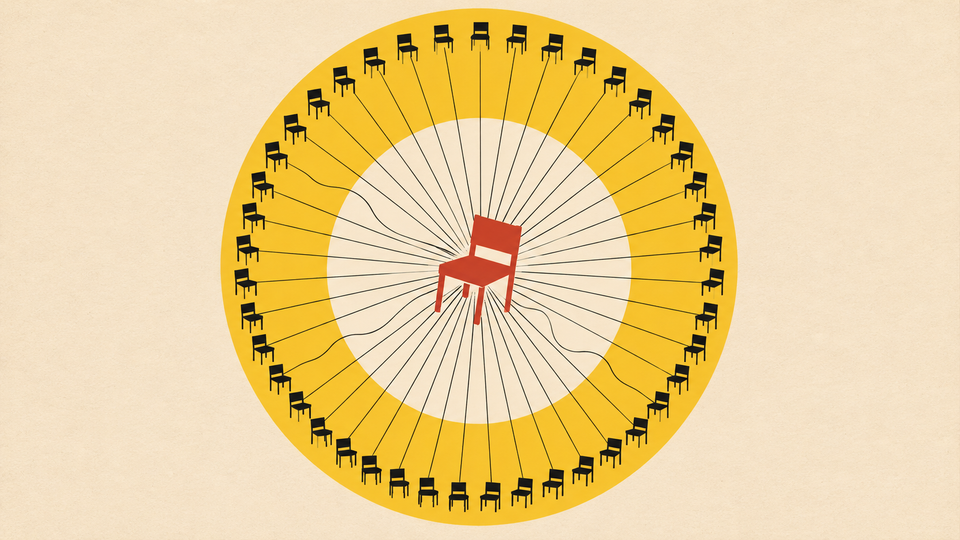
Huang ran an unusually flat company – he reportedly had more than sixty direct reports, far more than is typical, with few layers in between, so that information from across the company flowed to him and decisions flowed back out. This design can make a company fast, since there is little bureaucracy between a problem and the person who can solve it. It also means that much of what makes the company work depends on one person, which can make him hard to replace.
So how much do CEOs matter? One reason this is hard to answer is that good firms may simply hire good CEOs, in which case CEOs would look important even if they made no difference. Economists have looked for cases where an executive leaves for reasons that have nothing to do with how the firm is doing, such as sudden deaths. The evidence from these cases is that the stock price typically moves only a little on average, but prices fall more when the executive was hard to replace, and they can rise when investors expect the successor to do a better job. Because the stock price is forward-looking, it measures the gap between the CEO and whoever comes next, not the value of the CEO on their own.
That small average does not mean, however, that CEOs are unimportant, since small differences in ability get multiplied by the size of the firm. A CEO who makes slightly better decisions at a company worth a few billion dollars adds a modest amount of value. The same small improvement at a company worth several trillion dollars is worth an enormous amount, which, in one influential model, explains why pay for CEOs of the largest companies has grown along with the size of those companies. Nvidia sits at the extreme here too, so even a modest difference between Huang and his successor could be worth a great deal in dollar value.
Given the large potential impact of a single individual, it is natural to ask whether the risk of losing a CEO is “priced.” In one sense it clearly is, since news about a CEO changes what investors expect the firm to earn, and the stock price moves with it. Prices also reflect the uncertainty that follows a change. For example, stock volatility tends to be higher when a CEO is new and falls as investors learn what the new CEO is like. But in the sense finance usually means, whether investors earn a higher expected return for bearing this risk, the answer is usually no. Under the CAPM, purely company-specific risk earns no extra return, since an investor who holds many companies can diversify most of it away.
However, the textbook answer is harder to apply to Nvidia. The company is roughly 6% of the S&P 500, so a shock to Nvidia is also a noticeable shock to every investor who owns the index. Xavier Gabaix has argued that when a few firms are very large, shocks to those firms do not wash out across the economy the way the textbook assumes, and the same logic applies to a portfolio. Something as specific to one firm as a change of CEO can then move the market as a whole. And because Nvidia makes up part of the market itself, some of its company-specific risk is also market risk, which is exactly the kind of risk investors do get paid for bearing.
Other Stuff
- A WSJ analysis finds that over 40 years, the S&P 500 beat housing after taxes in every state. Worth remembering that a house also pays a dividend you never see in its price, which is the rent you don’t have to pay.
- The FT asks whether the bond market has a data-center concentration problem. The same worry about a few giant companies in stock indices now shows up in bond indices, as those companies borrow heavily to build data centers.